
First look at India’s agricultural machines & equipment market in 2025
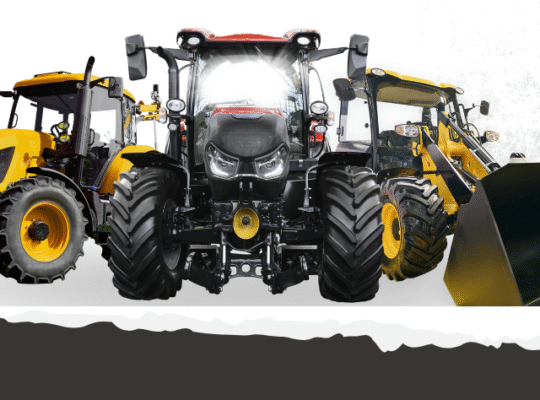
India remains one of the world’s most mechanised tractor markets by annual volume. Retail tractor sales in FY25 were ~8,83,095 units (FADA), down about 1% YoY from FY24, after an uneven monsoon and softer rural sentiment in parts of the year. Momentum improved into mid-2025: August 2025 retail was ~85,215 units, +30% YoY, pointing to a healthier kharif season and better moisture profile.
Implements beyond tractors are a large—and growing—pool. The Indian agricultural implements market was valued at ~US$14.2 billion in 2024 and is projected to double by 2033 (CAGR ~8.6%). This bucket includes rotavators, seeders/planters, balers, sprayers, harvest attachments, loaders/backhoes for tractors, etc.
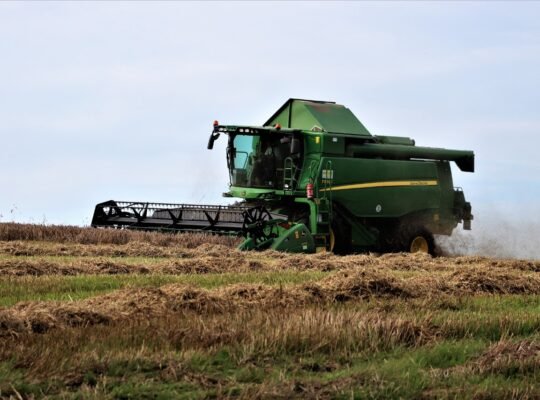
On harvesting, the combine harvester market is smaller in dollar terms but steady: ~US$275 million in 2025, with a ~5–6% CAGR outlook to 2030, supported by subsidies and the spread of custom hiring centres (CHCs) that let smallholders rent rather than buy.
What’s selling—and why
Tractors (the anchor)
- FY25 was a mild consolidation year (~8.83 lakh retail units), but the run-rate improved in Q2 FY26 (Aug-25 retail +30% YoY). OEMs leaned on festive demand, improved rabi realisations, and tighter channel inventory. Expectations for FY26 are cautiously positive if monsoon distribution stays supportive and rural credit keeps flowing.
- Capacity is still expanding: Escorts Kubota announced a new UP greenfield hub (investment phases totalling ~₹4,500 crore) to add up to ~100,000 tractors in the medium term—another vote of confidence in India as a production base and export hub.
- OEM colour: Mahindra reported its highest-ever yearly domestic tractor sales (FY25: ~4,07,094 units), underlining leadership at scale; others like TAFE (Massey), Swaraj (M&M), Sonalika, John Deere, New Holland, and Escorts Kubota round out a concentrated top tier.
Power tillers, weeders & small farm power
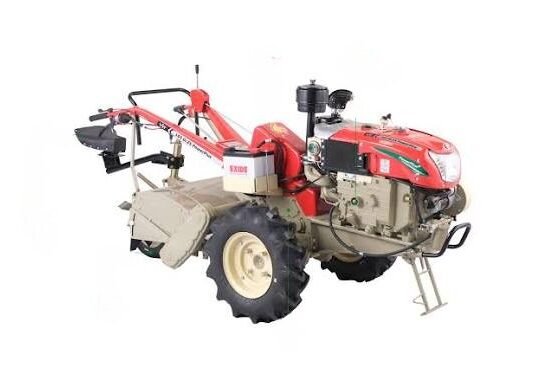
Power tillers are benefitting from fragmented holdings, labour scarcity, and state subsidies—especially in eastern and southern states. The segment is VST-heavy; a good proxy: VST’s power tiller sales in FY25 were ~37,297 units (wholesale), and monthly prints in 2025 (Apr–Aug) showed sharp YoY spikes (e.g., June 2025: ~6,651 tillers, >100% YoY). While that’s one company, it mirrors the wider compact mechanisation push.
Harvesters
Combine purchases remain region and crop specific (paddy-wheat belts, custom hiring clusters). Market value near US$275 million in 2025 grows with CHC penetration and straw-management compliance in the north-west. Domestic players (Preet, Kartar) and MNCs (CLAAS, New Holland) compete on throughput, grain loss, and uptime.
Implements (the quiet growth engine)
Implements are the broadest growth runway: rotavators, reversible ploughs, seed-cum-fertiliser drills, pneumatic planters, sprayers (boom and orchard), balers/rakes, loaders/backhoes for tractors, and sugarcane-specific attachments. The ~US$14.2 billion (2024) market with ~8.6% CAGR is driven by yield pressure per acre and labour substitution economics. Rotavators and planters remain high-velocity SKUs; balers rise where crop-residue norms tighten.
Policy tailwinds that matter for sales
Two levers are doing the heavy lifting:
- Sub-Mission on Agricultural Mechanization (SMAM) – central + state subsidies for machines and for Custom Hiring Centres/Hi-Tech hubs/Farm Machinery Banks. Revised guidelines in May 2025 keep the focus on smallholders and location-specific tech. As per official disclosures and the Economic Survey trail, India has >26,600 CHCs active by Dec-2024, with FY25 adding ~138; CRM (stubble) scheme alone seeded >41,900 CHCs and ~3.23 lakh residue-management machines since 2018-19. Net-net: easier access to machines without full ownership.
- Agri Infrastructure Fund (AIF) – cheaper debt for post-harvest assets and CHCs among others. As of 5 July 2024, AIF had mobilised ~₹73,194 crore, supporting ~17,196 CHCs plus thousands of primary processing units and warehouses—useful for dealers setting up rental fleets and for FPOs.
How buyers are deciding in 2025
- Total Cost of Ownership (TCO) beats sticker price. Diesel efficiency, uptime (service reach), and residual value matter more than ever. That’s why brands with dense rural service networks and ready spares are winning share even when list prices are close.
- Rental is mainstream. CHCs let a 2–3-acre farmer access a combine at harvest or a 45–50 hp tractor with rotavator for land prep, without loading up the balance sheet—this is lifting implement utilisation and keeping sales of hire-friendly SKUs brisk.
- Credit cycles drive seasonality. Tractor retail spikes around kharif/rabi peaks; FY25’s flat outcome and Aug-25 rebound (+30% YoY) underline how moisture and MSP realisations pull forward demand.
What this means for different players
Dealers & OEMs
- Keep inventory tight but demo heavy on implements. Bundled finance (tractor + rotavator + trailer) and assured buyback programs help close deals.
- Build/partner CHCs: a 25–40 machine pool (tillers → harvesters) in the right talukas can throw dependable utilisation; AIF + SMAM can soften capex.
FPOs & custom-hiring entrepreneurs
- Target crop-clusters (paddy combines in coastal AP, balers in NW India, sugarcane sets in MH/UP). Use AIF for sheds, tools, and working capital, and price rentals to cover service + transport, not just EMI.
Farmers (small & marginal)
- If you farm <5 acres, rent the harvester/planter, but consider owning a power tiller or 35–45 hp tractor if your utilisation crosses ~600–800 hours/year. Also check state-specific SMAM subsidy slabs—they materially change payback periods.
Outlook: FY26 and beyond
With kharif arrivals strong, tractor run-rates in early H2 FY26 look better than FY25’s average, and implements should keep outgrowing tractors as agronomy shifts toward precision and time-sensitive operations. Harvesters stay steady-to-up with CHCs expanding and residue-management enforcement tightening. Policy is aligned: SMAM (re-upped), AIF in place through 2025-26, and state top-ups continue in most large agri states. That’s a supportive backdrop for high-utilisation machines (rotavators, seeders, sprayers, balers) and compact mechanisation (tillers/weeders) alongside the tractor core.