



India’s CE market in FY25 was steady, not flashy. The industry sold 1,40,191 machines, up about 3.3% year-on-year. Inside that, domestic sales were 1,26,961 units (up ~2.7%) and exports were 13,230 units (up ~10%). India also kept its spot as the world’s #3 CE market, and about 98% of machines sold at home were made in India—so the “Make in India” story is real here.
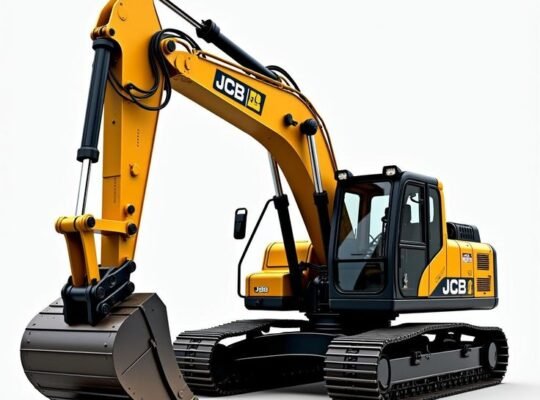
What actually moved? Earthmoving equipment did the heavy lifting with 99,159 units—that’s 71% of the market and about 6% growth. Within that, the familiar workhorses dominated: backhoe loaders at 53,133 units (roughly 54% of earthmoving) and crawler excavators at 35,816 (about 36%). After earthmoving, material handling logged 17,050 units, concrete equipment did 14,473 units (about +3%), road construction equipment touched 7,002 units, and material processing was 2,507 units. In short: backhoes and excavators are still the stars; the rest of the kit moved more slowly.
Why was growth “steady” rather than “super-charged”? Three simple reasons. First, the election cycle cooled project execution and payments for a bit, which made buyers cautious. Second, new emission rules (CEV-V) started 1 January 2025, so a lot of purchasing was pulled forward into late 2024 to avoid price hikes—leaving early 2025 a bit quiet. Third, financing stayed tight, the monsoon lingered, and input costs didn’t help. Together, these made H1 FY25 feel choppy even though the full year still finished in the green.
Even with those bumps, demand didn’t disappear because the infrastructure pipeline stayed large. In the Union Budget for FY26, the Centre earmarked ₹11.21 lakh crore for capital expenditure (~3.1% of GDP), plus ₹1.5 lakh crore in 50-year interest-free loans to states. That’s a strong base for roads, rail, urban projects, and water—exactly the places where equipment works.
On roads specifically, the Bharatmala Pariyojana numbers are sizable. As of 28 February 2025, 26,425 km of projects had been awarded and 19,826 km had been constructed. Within the high-speed greenfield corridors, 6,669 km were awarded and 4,610 km completed. Translation: there’s plenty of site prep, earthmoving, paving, and concrete work to keep fleets busy over the next stretch.
A quick note on the CEV-V rule change, because it affects pricing and specs you’ll see on the ground. The CEV-V standard kicked in from 1 January 2025. There’s a six-month grace window where registration of older-norm machines is still allowed, and in-service conformity checks for Stage-V engines will start April 2026. Practically, that means cleaner machines with after-treatment (and DEF support), slightly higher upfront prices, and—over time—better running and emissions. If you’re buying, budget for the new hardware and make sure your service setup (filters, DEF, sensors) is ready.
How did each segment really feel in 2025?
• Backhoe loaders stayed the reliable all-rounders—still above 53k units—thanks to roads, rural works, site prep, and rentals.
• Crawler excavators continued their uptrend (about 35.8k units), lifted by highways, metro work, mining overburden, and industrial parks.
• Concrete and road equipment were flat to modest, but should pick up as awarded kilometres turn into on-ground execution.
• Material handling/processing was patchy in FY25, tied to softness in some end-use sectors—watch for a better tone as factory/warehouse and port/logistics capex improves.
Outlook for late 2025 and FY26: With elections behind us and CEV-V settling in, the market setup looks healthier. The budget math (capex + state loans) and the Bharatmala pipeline argue for improving demand into FY26. Exports are also a useful cushion—remember, they were up ~10% in FY25—so OEMs with the right homologations and dealer networks abroad have another lever if domestic demand wobbles.
What to do with this if you’re in the market:
• Contractors/fleet owners: Don’t judge only by sticker price. Compare fuel use, uptime, parts availability, and resale on the new CEV-V machines; check that your dealer can support after-treatment/DEF properly. If cash flow is tight, rental and used are sensible bridges through the transition.
• OEMs/dealers: Double down on financing tie-ups, buy-back/resale programs, and rental to soften higher upfront costs for customers. Keep building export channels—they helped in FY25 and can help again.
Bottom line: 2025 wasn’t a sprint, but it built a stable base. With 1.40 lakh units sold, a thick roads pipeline, and capex at 3.1% of GDP, the stage is set for better momentum through late 2025 and into FY26—especially as the new emission regime becomes “business as usual.”